john

Optimization under Uncertainty using DSI

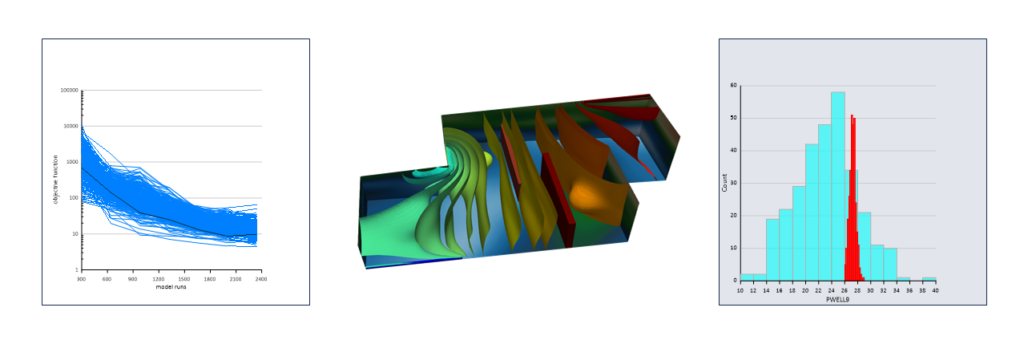
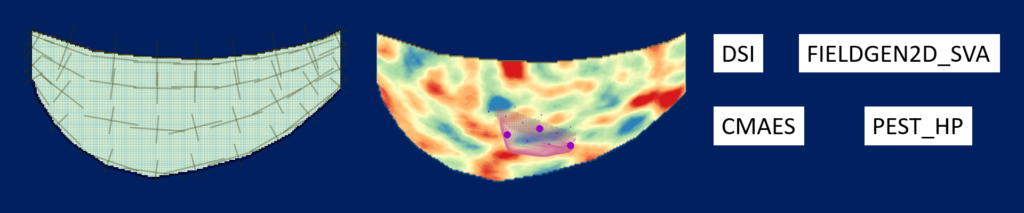
Optimization under uncertainty is notoriously numerically intensive. However its numerical burden can be reduced if data space inversion (DSI) is used to construct a surrogate statistical model that can be used in place of the numerical model. This tutorial explores how new ideas from the petroleum industry can be explored using programs from the PEST […]

Optimization under Uncertainty using DSI Read More »
ENSI and Linear Analysis

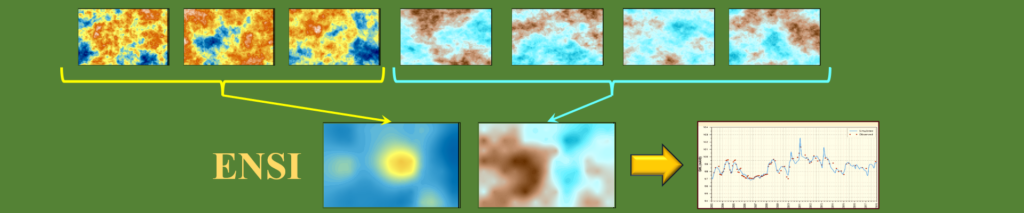
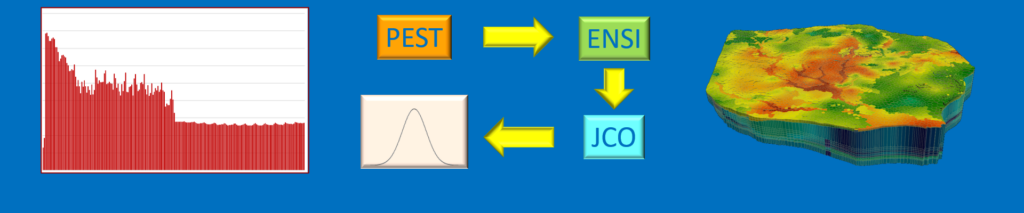
Ensemble space inversion (ENSI) enables efficient, regularisation-constrained calibration of complex, highly-parameterised models. This tutorial demonstrates how linear analysis can be undertaken in partnership with the ENSI calibration. This provides estimates of parameter and predictive uncertainty at minimal numerical cost. This tutorial is a continuation of another GMDSI tutorial. These tutorials can be done independently or

ENSI and Linear Analysis Read More »

Ensemble Space Inversion

Ensemble space inversion (ENSI) is implemented through the PEST_HP suite (version 18). Using ENSI you can calibrate a complex model quickly. The calibration subspace is comprised of random parameter realisations as well as individual parameters. Realisations can be different for different parameter types. Regularisation seeks a minimum error variance solution within the confines of the working

Ensemble Space Inversion Read More »

From Site Concepts to a 3D Site Model

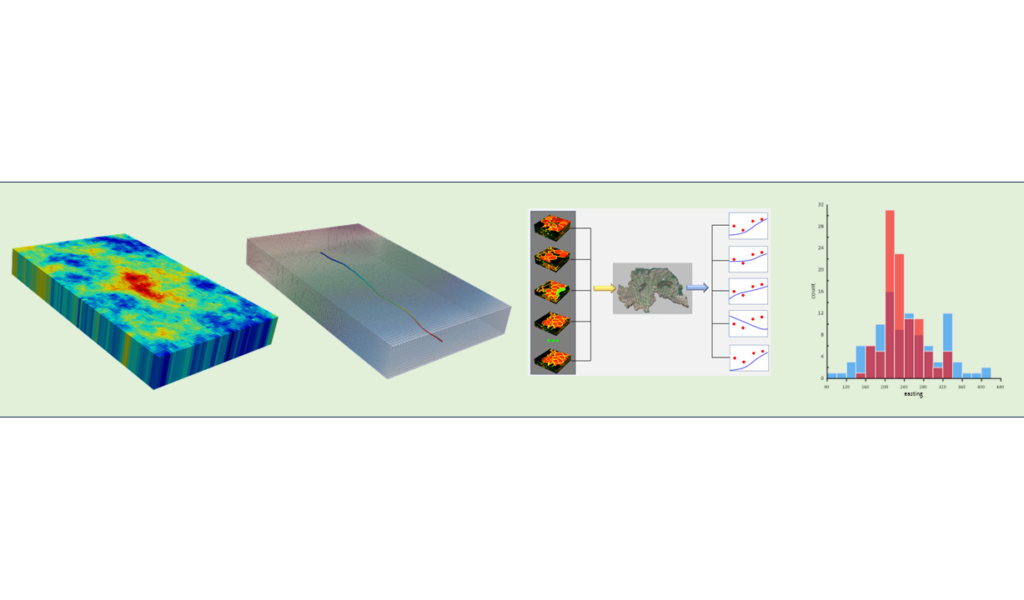
Building and history-matching a three-dimensional model is a difficult procedure. The third dimension increases parameter requirements, model run times, and model output uncertainty. Ideally, predictive uncertainty can be reduced through assimilating information from site characterisation on the one hand, and measurements of system behaviour on the other hand. But this is so much harder in

From Site Concepts to a 3D Site Model Read More »

Conceptual Model to Numerical Model

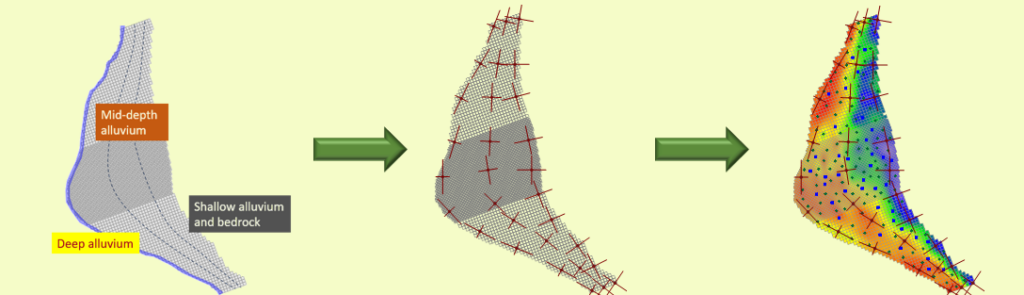
This tutorial explores the use of “conceptual points” as a precursor to model parameterisation. Expected hydraulic properties are provided at these conceptual points. Just as importantly, so-called “hyperparameters” are also ascribed to these points; these are used to characterise the nature of hydraulic property heterogeneity as it is likely to prevail in their vicinity. All

Conceptual Model to Numerical Model Read More »

Data Assimilation for a Simple Model

This tutorial explores construction of the interface between PEST/PEST++and a simple MODFLOW/MODPATH model, and how to then subject that model to history-matching and uncertainty analysis–including data space inversion (DSI).There is some overlap with a previous tutorial. However, there are also some important differences. Use of the PLPROC, TPL2PST and PESTPREP2 utilities are explained. The first

Data Assimilation for a Simple Model Read More »